Looking for a Place To Call Home? Consider a Condominium.

Looking for a Place To Call Home? Consider a Condominium. | Simplifying The Market

It’s no secret that one of the top stories in today’s real estate market is low housing supply and high buyer demand. If you’re a first-time buyer looking for a starter home or are someone who’s interested in downsizing, it may be worth considering a condominium (condo) as a worthwhile option.

In fact, trends indicate condos are gaining popularity among buyers. In the latest Existing Homes Sales Report from the National Association of Realtors (NAR), the data shows condo sales rising throughout the first half of this year (see graph below):Looking for a Place To Call Home? Consider a Condominium. | Simplifying The MarketThere are a few reasons more and more people are opting to buy condos – the benefits of condo life can be quite compelling. Let’s explore the main perks to find out if a condo is a good fit for you.

Affordability

According to the NAR report, the median sales price of a condo is roughly $59,000 less than the median price of a single-family detached home (see graph below). This makes condos a great option for first-time homebuyers, those with limited down payment savings, or those looking to save money by downsizing.Looking for a Place To Call Home? Consider a Condominium. | Simplifying The Market

Maintenance

A recent article from BankRate adds low maintenance as another perk of a condo lifestyle. Generally, exterior maintenance for condos is handled by a Homeowner’s Association (HOA). This can include things like landscaping and upholding a certain standard of cleanliness and condition for walkways, siding, and roofs. If you’re looking for a lower-maintenance option or see the appeal in being hands-off with upkeep, condos may be a good choice for you. With exterior maintenance off your plate, you’ll have more time for yourself and your hobbies.

Amenities

You can use that free time to enjoy some of the value-adding features your condo community may have, which could include dog parks, pools, a rentable clubhouse and grilling area for events, and more. If being able to host or attend community social outings is important to you, condos may give you more opportunities to enjoy the company of your neighbors. As a bonus, some condos even have gyms and on-site security teams.

Ultimately, the choice is yours. Condos are great options that often come with various features and benefits that may be important for your lifestyle. Fannie Mae sums up the appeal nicely:

Condominiums, or condos, can be great alternatives to detached homes. City dwellers, singles, couples, seniors, and many others may find condos that suit their needs and budgets. Others may simply prefer low-maintenance living. Buyers who feel ‘priced out’ of homes may discover condos offer an affordable homeownership alternative.

Bottom Line

If you’re looking for a home, it may be time to consider a condo as an option. Let’s connect to explore if one would be a good fit for your homeownership needs.

The Community and Economic Impacts of a Home Sale

The Community and Economic Impacts of a Home Sale | Simplifying The Market

If you’re thinking of buying or selling a house, chances are you’re focusing on the many extraordinary ways it’ll change your life. What you may not realize is that decision impacts people’s lives far beyond your own. Home purchases and sales are significant drivers of economic activity. They have a major impact on your community and the entire U.S. economy via the multiple industries and professionals that take part in the process.

The National Association of Realtors (NAR) releases a report each year that highlights just how much economic activity a home sale generates. The chart below shows how the sale of both a newly built home and an existing home impact the economy:The Community and Economic Impacts of a Home Sale | Simplifying The MarketTo dive a level deeper, NAR also provides a detailed look at how that varies state-by-state for newly-built homes (see map below):The Community and Economic Impacts of a Home Sale | Simplifying The MarketAs you can see, a single home sale can have a massive effect on the overall economy. Ali Wolf, Chief Economist for Zonda, talks about this in a recent article, noting there’s a significant impact at each distinct phase of the transaction:

The housing market contributes to the economy in four main stages: during planning and land development, throughout the actual construction of the home, at the point of sale, and upon moving in.

When you buy or sell a home, you’re leaving a lasting impression on the community at large in addition to fulfilling your own needs. That’s because each stage of the process involves numerous contractors, specialists, lawyers, town and city officials, and so many other professionals. Every individual you work with, from your trusted real estate advisor to the architects who design new homes, has their own team of professionals involved behind the scenes.

Bottom Line

Homebuyers and sellers are economic drivers in their community and beyond. If you’re thinking of buying or selling, let’s connect today to start the process. It won’t just change your life; it’ll make a powerful impact on our entire community.

Surprising Shift Favors Homeowners: Buyers Now Prefer Existing Homes

Surprising Shift Favors Homeowners: Buyers Now Prefer Existing Homes | Simplifying The Market

In April, the National Association of Home Builders (NAHB) posted an article, Home Buyers’ Preferences Shift Towards New Construction, which reported:

60% of people who were looking to buy a home in 2020 said they’d prefer new construction to an existing home.

However, it seems buyers are now shifting their preferences back to existing homes.

The latest Consumer Confidence Survey reveals the percentage of Americans planning to buy a home in the next six months is virtually the same as it was back in March. However, the percentage that plan to buy a newly constructed home is lower for that same period.

NAHB confirms this sentiment in their latest Housing Trends Report. The organization explains that existing homes are now the top preference among today’s buyers. Here’s a breakdown of those findings:Surprising Shift Favors Homeowners: Buyers Now Prefer Existing Homes | Simplifying The Market

Why the shift?

There are several reasons why buyer preference is shifting. Here are two that impact purchasers looking to move in now:

  • The process may move faster. Builders may not be able to guarantee when the house will be complete and ready for move-in due to supply chain challenges with materials like lumber and appliances. If you buy an existing home, not only is it ready, it also likely has a refrigerator, range, and other necessary home appliances already.
  • There are no unexpected costs during the buying process. With the price of land, labor, and lumber being so volatile, many builders are including an escalation clause in the price negotiation to cover rising expenses. With an existing home, the final price you will pay is negotiated upfront.

Bottom Line

If you’re a homeowner looking to sell, your house is more attractive to a greater number of buyers as compared to earlier in the year. This might be the time for us to connect to discuss the possibility.

With Rents on the Rise – Is Now the Time To Buy?

With Rents on the Rise – Is Now the Time To Buy? | Simplifying The Market

According to recent data from realtor.com, median rental prices have reached their highest point ever recorded in many areas across the country. The report found rents rose by 8.1% from the same time last year. As it notes:

Beyond simply recovering to pre-pandemic levels, rents across the country are surging. Typically, rents fluctuate less than 1% from month to month. In May and June, rents increased by 3.0% and 3.2% from each month to the next.”

If you’re a renter concerned about rising prices, now may be the time to consider purchasing a home.

Monthly Rents Are Higher Than Monthly Mortgage Payments

When you weigh your options of whether to buy a home or continue renting, how much you’ll pay each month is likely top of mind. According to the National Association of Realtors (NAR), monthly mortgage payments are rising, but they’re still significantly lower than the typical rental payment. NAR indicates the latest data on homes closed shows the median monthly mortgage payment is $1,204.

By contrast, the median national rent is $1,575 according to the most current data provided by realtor.com. In other words, buyers who recently purchased a home locked in a monthly payment that is, on average, $371 lower than what renters pay today (see graph below):With Rents on the Rise – Is Now the Time To Buy? | Simplifying The Market

Rents Are Rising Sharply, and They Continue To Increase

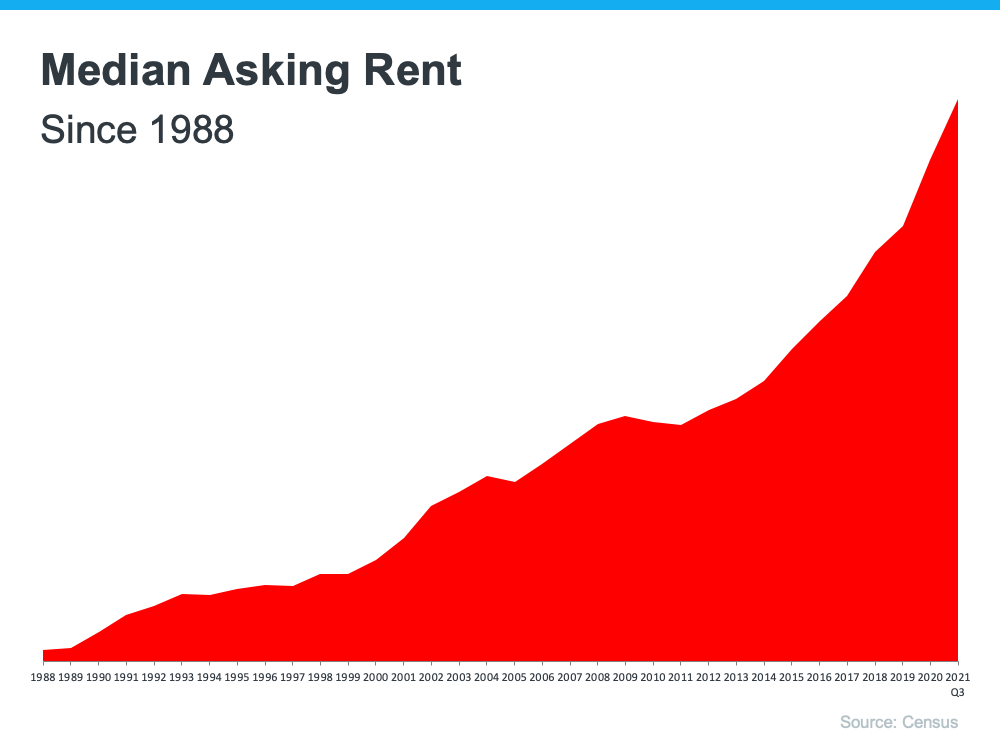
The difference in monthly housing costs when comparing renting and homebuying today is significant, but many would-be homebuyers wonder about the future of rental prices. If we look to historical Census data as a reference, the median asking rent has risen consistently since 1988 (see graph below):With Rents on the Rise – Is Now the Time To Buy? | Simplifying The MarketThe rise in rent over time clearly shows one of the major advantages homeownership has over renting: stable housing costs. Renters face increasing costs every year. When you purchase your home, your mortgage rate is locked in for 30 years, meaning your monthly payment stays the same over time. That gives you welcome peace of mind and predictability for many years ahead.

Bottom Line

With rents continuing to rise across the country, renters should consider if now is the right time to buy. There are multiple benefits to buying sooner rather than later. Let’s discuss your options so you can make your most powerful decision.

Key Questions To Ask Yourself Before Buying a Home

Key Questions To Ask Yourself Before Buying a Home | Simplifying The Market

Sometimes it can feel like everyone has advice when it comes to buying a home. While your friends and loved ones may have your best interests in mind, they may also be missing crucial information about today’s housing market that you need to make your best decision.

Before you decide whether you’re ready to buy a home, you should know how to answer these three questions.

1. What’s Going on with Home Prices?

Home prices are one factor that directly impacts how much it will cost to buy a home and how much you stand to gain as a homeowner when prices appreciate.

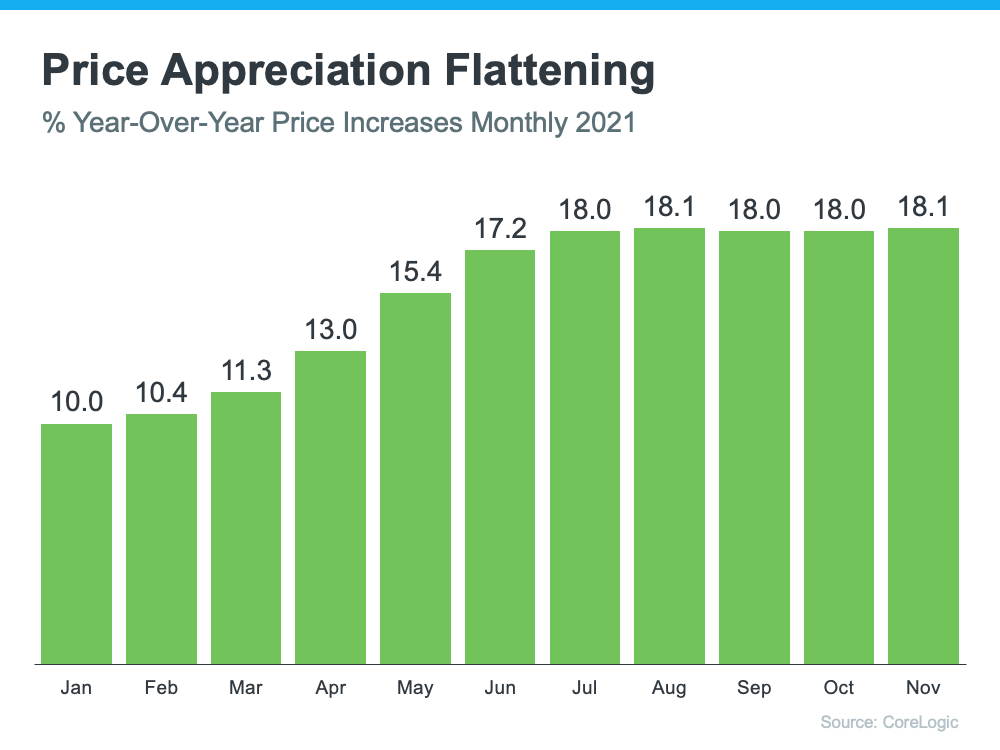
The graph below shows just how much experts are forecasting prices to rise this year:Key Questions To Ask Yourself Before Buying a Home | Simplifying The MarketContinued price appreciation is great news for existing homeowners but can pose a significant challenge if you wait to buy. Using these forecasts, you can determine just how much waiting could cost you. If prices increase based on the average of all forecasts (12.46%), a median-priced home that cost $350,000 in January of 2021 will cost an additional $43,610 by the end of the year. What does this mean for you? Put simply, with home prices increasing, the longer you wait, the more it could cost you.

2. Are Today’s Low Mortgage Rates Going To Last?

Another significant factor that should inform your decision is mortgage interest rates. Today’s average rates remain close to record-lows. Much like prices, though, experts forecast rates will rise over the coming months, as the chart below shows:Key Questions To Ask Yourself Before Buying a Home | Simplifying The MarketYour monthly mortgage payment can be significantly impacted by even the slightest increase in mortgage rates, which makes the overall cost of the home greater over time when you wait.

3. Why Is Homeownership Important to You?

The final question is a personal one. Before deciding, you’ll need to understand your motivation to buy a home and why homeownership is an important goal for you. The financial benefits of owning a home are often easier to account for than the many emotional ones.

The 2021 National Homeownership Market Survey shows that six of the nine reasons Americans value homeownership are because of how it impacts them on a personal, aspirational level. The survey says homeownership provides:

  • Stability
  • Safety
  • A Sense of Accomplishment
  • A Life Milestone
  • A Stake in the Community
  • Personal Pride

The National Housing & Financial Capability Survey from NeighborWorks America also highlights the emotional benefits of homeownership:Key Questions To Ask Yourself Before Buying a Home | Simplifying The MarketClearly, there’s a value to homeownership beyond the many great financial opportunities it provides. It gives homeowners a sense of pride, safety, security, and accomplishment – which impacts their lives and how they feel daily.

Bottom Line

Homeownership is life-changing, and buying a home can positively impact you in so many ways. With any decision this big, it helps to have a trusted advisor by your side each step of the way. If you’re ready to begin your journey toward homeownership, let’s connect to discuss your options and begin your journey.

Waiting To Buy a Home Could Cost You [INFOGRAPHIC]

Waiting To Buy a Home Could Cost You [INFOGRAPHIC] | Simplifying The Market

Waiting To Buy a Home Could Cost You [INFOGRAPHIC] | Simplifying The Market

Some Highlights

  • If you’re thinking of buying a home but wondering if waiting a few years will save you in the long run, think again.
  • The longer the wait, the more you’ll pay, especially when mortgage rates and home prices rise. Even the slightest change in the mortgage rate can have a big impact on your buying power no matter your price point.
  • Don’t assume waiting will save you money. Let’s connect to set the ball into motion today while mortgage rates are hovering near historic lows.

3 Hot Topics in the Housing Market Right Now

3 Hot Topics in the Housing Market Right Now | Simplifying The Market

If you’re a prospective buyer or seller, it’s important to understand the current real estate market conditions and how they affect you. The Counselors of Real Estate (CRE) just released its Top Ten Issues Affecting Real Estate report. Here are three hot topics from the list and how they impact today’s housing market.

Technology Acceleration and Innovation

The past year ushered in many changes to the real estate industry, especially when it comes to technology. The CRE report elaborates on this:

“Lockdown-driven changes in our work, in the economy, in social structures, and in our personal behavior have pushed our reluctance aside. The acceleration and adoption of technology during the pandemic has impacted everything, and real estate is no exception.

For real estate, innovations like digital documentation, virtual tours, and video chat enable agents to connect with clients no matter their location. These options are ideal for prospective buyers and sellers who aren’t local to the area or those that need the added flexibility signing documents online or doing virtual tours provide. That’s why many trusted real estate advisors will continue to use these technologies moving forward to best serve their clients.

Remote Work and Mobility

Working from home became the reality for many individuals during the pandemic, and the latest list from the CRE identified remote work and mobility as an important influence on the real estate market. As the report notes:

the pandemic universally caused a movement away from urban cores, particularly for those with higher incomes who could afford to move and for lower-income individuals seeking lower costs of living. Most of these relocations remained within their original region—84%—and, while some are returning, it is unknown as to the permanence of these movements or whether they represent a true urban exodus.

With the added mobility remote work offers, where people are moving and where they can ultimately purchase a home is less dependent on a physical office location. This newfound flexibility is giving remote workers the opportunity to move to more affordable areas and buy more home for their money.

Housing Supply and Affordability

Finally, the limited supply of houses for sale and the related affordability challenges also makes CRE’s list of key factors this year:

“According to the National Association of Realtors®, the state of America’s housing inventory is dire, with a chronic shortage of affordable and available homes needed to support the nation’s population.”

There is good news. Homes are still more affordable than they have been historically thanks to today’s low mortgage rates. And while housing supply is still low, we’re seeing steady increases in the number of homes coming to market, which gives hope to homebuyers. As the supply of homes for sale improves, buyers will have more options.

Bottom Line

New technology, remote work, housing supply, and home affordability are key factors in the housing market right now for both buyers and sellers. If you want to better understand how these topics can impact you, let’s connect today.

The Power of Mortgage Pre-Approval [INFOGRAPHIC]

The Power of Mortgage Pre-Approval [INFOGRAPHIC] | Simplifying The Market

The Power of Mortgage Pre-Approval [INFOGRAPHIC] | Simplifying The Market

Some Highlights 

  • Mortgage pre-approval means a lender has reviewed your finances and, based on factors like your income, debt, and credit history, determined how much you’re qualified to borrow.
  • Being pre-approved for a loan can give you clarity while planning your homebuying budget, confidence in your ability to secure a loan, and a competitive edge in a bidding war.
  • In today’s market, connecting with a lender to get pre-approved may be the game-changer that helps you secure your dream home.

Why Waiting to Buy a Home Could Cost You a Small Fortune

Why Waiting to Buy a Home Could Cost You a Small Fortune | Simplifying The Market

Many people are sitting on the fence trying to decide if now’s the time to buy a home. Some are renters who have a strong desire to become homeowners but are unsure if buying right now makes sense. Others may be homeowners who are realizing that their current home no longer fits their changing needs.

To determine if they should buy now or wait another year, they both need to ask two simple questions:

  1. Do I think home values will be higher a year from now?
  2. Do I think mortgage rates will be higher a year from now?

Let’s shed some light on the answers to these questions.

Where will home prices be a year from now?

If you average the most recent projections from the major industry forecasters, the expectation is home prices will increase by 7.7%. Let’s take a house that’s valued today at $325,000 as an example.

If the buyer makes a 10% down payment ($32,500), they’ll end up borrowing $292,500 for their mortgage. Applying the projected rate of home price appreciation, that same house will cost $350,025 next year. With a 10% down payment ($35,003), they’d then have to borrow $315,022.

Therefore, as a result of rising home prices alone, a prospective buyer will have to put down an additional $2,503 and borrow an additional $22,523 just for waiting a year to make their move.

Where will mortgage rates be a year from now?

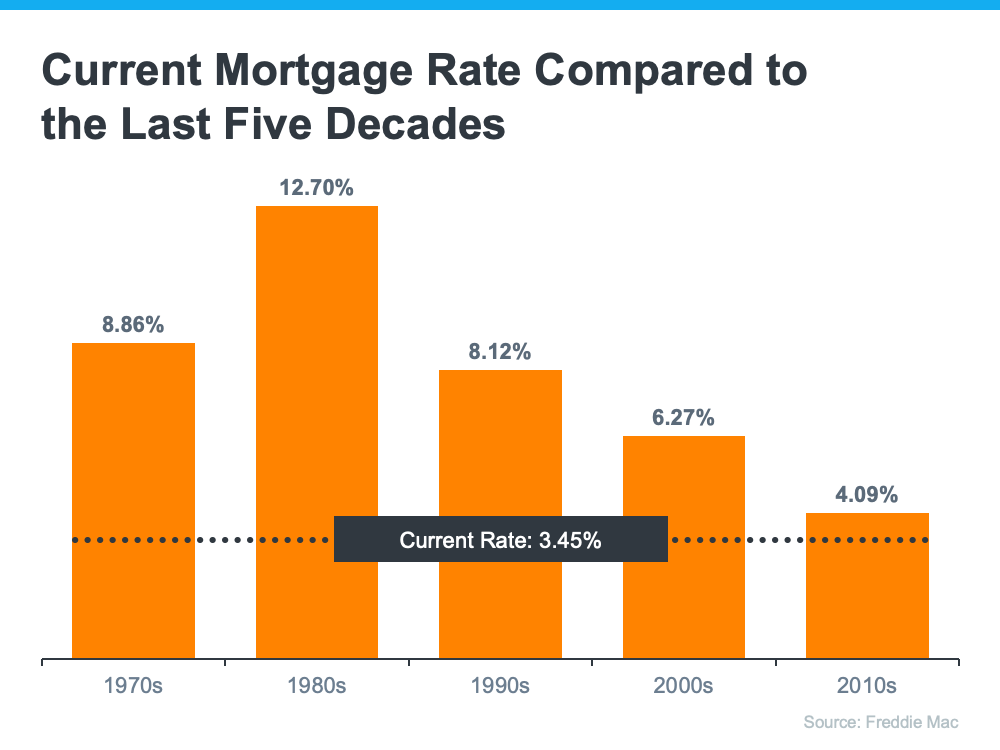
Today, mortgage rates are hovering around 3%. However, most experts believe they’ll rise as the economy continues to recover. Any increase in the mortgage rate will also increase a purchaser’s cost. Here are the forecasts for the first quarter of 2022 from four major entities:

The projections average out to 3.6% among these four forecasts, a jump up from where they are today.

What does it mean to you if home values and mortgage rates increase?

A buyer will pay a lot more in mortgage payments each month if both of these variables increase. Assuming a buyer purchases a $325,000 home this year with a 30-year fixed-rate loan at 3% after making a 10% down payment, their monthly principal and interest payment would be $1,233.

That same home one year from now could be $350,025, and the mortgage rate could be 3.6% (based on the industry forecasts mentioned above). That monthly principal and interest payment, after putting down 10%, totals $1,432.

The difference in the monthly mortgage payment would be $199. That’s $2,388 more per year and $71,640 over the life of the loan.

Add to that the approximately $25,000 a house with a similar value would build in home equity this year as a result of home price appreciation, and the total net worth increase a purchaser could gain by buying this year is nearly $100,000. That’s a small fortune.

Bottom Line

When asking if they should buy a home, many potential buyers think of the nonfinancial benefits of owning a home. When asking when to buy, the financial benefits make it clear that doing so now is much more advantageous than waiting until next year.

Are Interest Rates Expected to Rise Over the Next Year?

Are Interest Rates Expected to Rise Over the Next Year? | Simplifying The Market

So far this year, mortgage rates continue to hover around 3%, encouraging many hopeful homebuyers to enter the housing market. However, there’s a good chance rates will increase later this year and going into 2022, ultimately making it more expensive to borrow money for a home loan. Here’s a look at what several experts have to say.

Danielle Hale, Chief Economist, realtor.com:

Our long-term view for mortgage rates in 2021 is higher. As the economic outlook strengthens, thanks to progress against coronavirus and vaccines plus a dose of stimulus from the government, this pushes up expectations for economic growth . . . .”

Lawrence Yun, Chief Economist, National Association of Realtors (NAR):

In 2021, I think rates will be similar or modestly higher . . . mortgage rates will continue to be historically favorable.”

Freddie Mac:

We forecast that mortgage rates will continue to rise through the end of next year. We estimate the 30-year fixed mortgage rate will average 3.4% in the fourth quarter of 2021, rising to 3.8% in the fourth quarter of 2022.”

Below are the most recent mortgage rate forecasts from four top authorities – Freddie Mac, Fannie Mae, the Mortgage Bankers Association (MBA), and NAR:Are Interest Rates Expected to Rise Over the Next Year? | Simplifying The Market

Bottom Line

If you’re planning to buy a home, purchasing before mortgage interest rates rise may help you save significantly over the life of your home loan.