5 Reasons Today’s Housing Market Is Anything but Normal

5 Reasons Today's Housing Market Is Anything but Normal | Simplifying The Market

There are many headlines out there that claim we’re reverting to a more normal real estate market. That would indicate the housing market is returning to the pre-pandemic numbers we saw from 2015-2019. But that’s not happening. The market is still extremely vibrant as demand is still strong even while housing supply is slowly returning.

Here’s the definition of normal from the Merriam-Webster Dictionary:

“conforming to a type, standard, or regular pattern: characterized by that which is considered usual, typical, or routine.

Using this definition, here are five housing industry metrics that prove we’re nowhere near normal.

1. Mortgage Rates

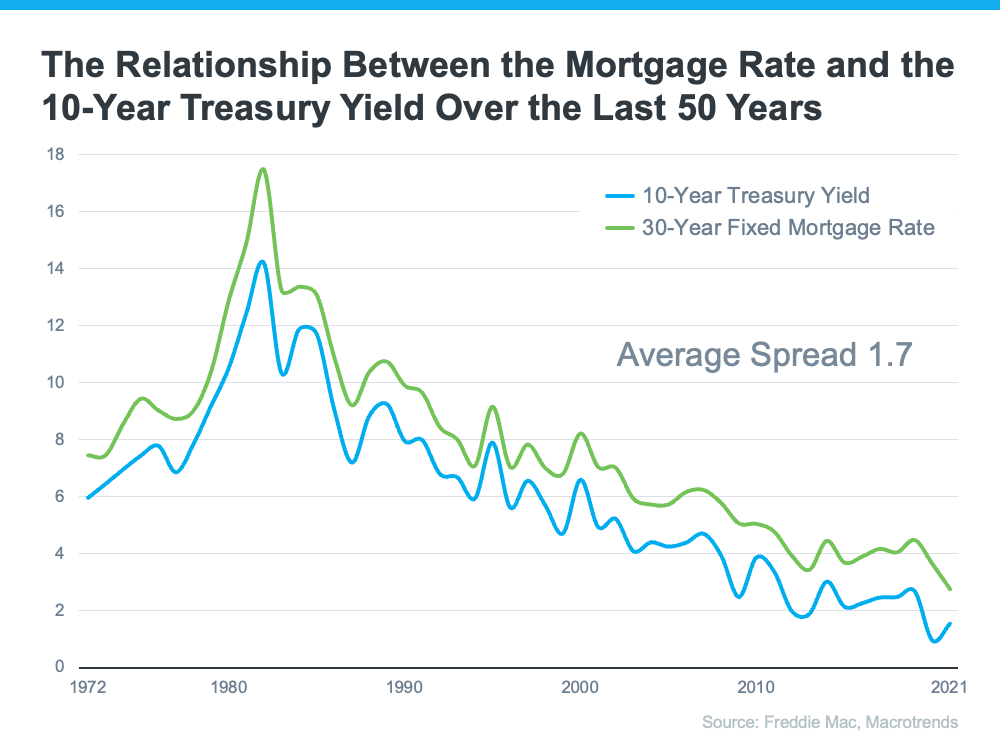
If we look at the 30-year mortgage rate chronicled by Freddie Mac, we can see the average rates by decade:

  • 1970s: 8.86%
  • 1980s: 12.7%
  • 1990s: 8.12%
  • 2000s: 6.29%
  • 2010s: 4.09%

Today, the average mortgage rate stands at 2.87%, which is very close to the historic low.

Currently, mortgage rates are anything but usual, typical, or routine.

2. Home Price Appreciation

According to Black Knight, a housing data and analytics company, the average annual appreciation on residential real estate prices since 1995 has been 4.14%.

According to the latest forecast from the National Association of Realtors (NAR), home price appreciation will hit 14.1% this year, which will be greater than any year since Black Knight began collecting this data.

Currently, home price appreciation is anything but usual, typical, or routine.

3. Months’ Supply of Inventory (Homes for Sale)

According to NAR:

“Months’ supply refers to the number of months it would take for the current inventory of homes on the market to sell given the current sales pace. Historically, six months of supply is associated with moderate price appreciation, and a lower level of months’ supply tends to push prices up more rapidly.”

As of the latest Existing Homes Sales Report from NAR, the current months’ supply of inventory stands at 2.6. That’s less than half of a normal supply.

Currently, the supply of homes for sale is anything but usual, typical, or routine.

4. Days It Takes To Sell a Home

The days-on-market metric gives an indication of how hot a market is and how quickly homes are selling. In 2019, prior to the pandemic, the average days on market stood at 35, according to NAR. Today, that number is cut in half and is now at 17 days.

Currently, the days-on-market metric is anything but usual, typical, or routine.

5. Number of Offers per Listing

According to NAR, the number of offers per listing stood at 2.2 in 2019. Today, that number is double at 4.5.

Currently, the number of offers per listing is anything but usual, typical, or routine.

Bottom Line

When…

  1. Mortgage rates are near historic lows
  2. Price appreciation is at historic highs
  3. Housing inventory is less than half of the normal amount
  4. The time it takes to sell a home is cut in half, and
  5. There are twice as many offers on each house

…it’s hard to say we’re in a normal market.

What You Can Do Right Now To Prepare for Homeownership

What You Can Do Right Now To Prepare for Homeownership | Simplifying The Market

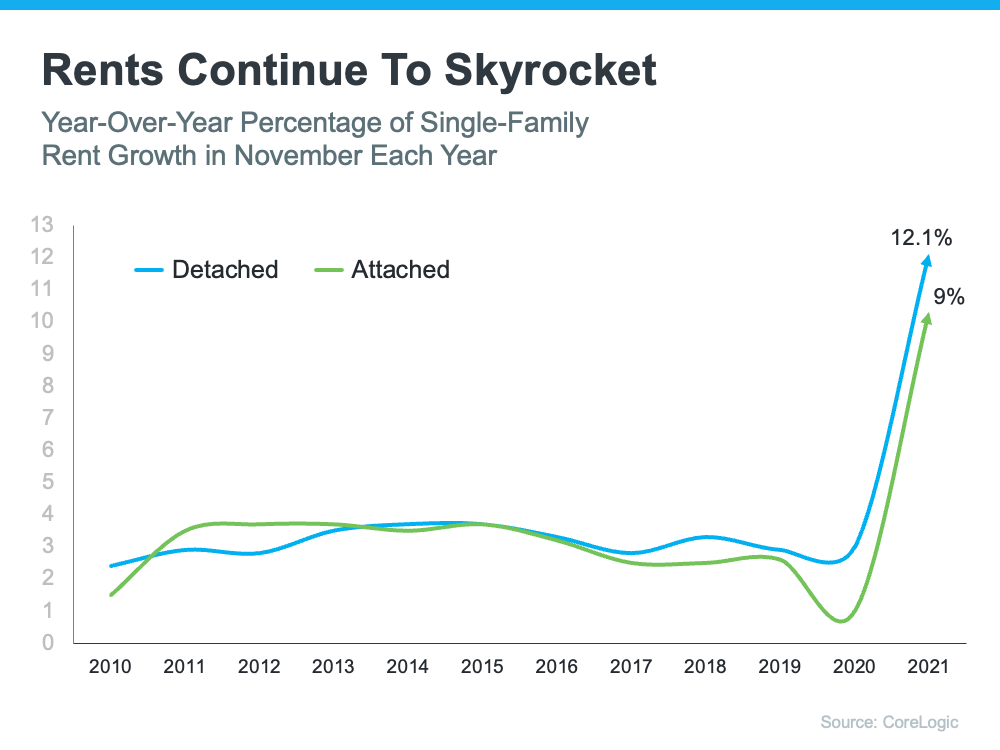
As rent prices continue to soar, many renters want to know what they can do to get ready to buy their first home. According to recent data from ApartmentList.com:

The first half of 2021 has seen the fastest growth in rent prices since the start of our estimates in 2017. Our national rent index has increased by 11.4 percent since January . . . .”

Those rising rental costs may make it seem impossible to prepare for homeownership if you’re a renter. But the truth is, there are ways you can – and should – prepare to purchase your first home. Here’s some expert advice on what to do if you’re ready to learn more about how to escape rising rents.

Start Saving – Even Small Amounts – Now

Experts agree, setting aside what you can – even smaller amounts of money – into a dedicated savings account is a great starting point when it comes to saving for a down payment. As Cindy Zuniga-Sanchez, Founder of Zero-Based Budget Coaching LLC, says:

“I recommend saving for a home in a ‘sinking fund’ . . . . This is a savings account separate from your emergency fund that you use to save for a short or mid-term expense.

Zuniga-Sanchez adds saving in smaller increments can help make a large goal – such as saving for a down payment –achievable:

“Breaking up your goals into smaller bite-sized pieces by saving incrementally can make a large daunting number more manageable.”

Assess Your Finances and Work on Your Credit

Another tip experts recommend: take a look at your overall finances and credit score and find ways to reduce your debt. According to the HUD, the average credit score of first-time homebuyers is 716. If you’re not sure what your credit score is, there are numerous online tools that can help you check. If your score is below that average, don’t fret. Remember that an average means there are homeowners with credit scores both above and below that threshold.

If you find out your score is below the average, there are several ways to improve your credit before you apply for a loan. HUD recommends reducing your debt as much as you can, paying your bills on time, and using your credit card responsibly.

Start the Conversation with Your Advisor Today

Finally, it’s important to talk to someone who understands the market and what it takes to become a first-time homebuyer. That’s where we come in. A trusted advisor can help you navigate your specific market and talk you through all the available options. Having the right network of real estate and lending professionals in your corner can help you plan for the homebuying process as well as determine what you can afford and how you can get pre-approved when you’re ready.

Most importantly, we can help you understand how homeownership is achievable. As Lauren Bringle, Accredited Financial Advisor with Self Financial, says:

“Don’t write home ownership off just because you have a low income . . . . With the right tools, resources and assistance, you could still achieve your dream.”

Bottom Line

If you’re planning to be a homeowner one day, the best thing you can do is start preparing now. Even if you don’t think you’ll purchase for a few years, let’s connect today to discuss the process and to set you up for success on your journey to homeownership.

What Buyers and Sellers Need To Know About the Appraisal Gap

What Buyers and Sellers Need To Know About Appraisal Gaps | Simplifying The Market

It’s economy 101 – when supply is low and demand is high, prices naturally rise. That’s what’s happening in today’s housing market. Home prices are appreciating at near-historic rates, and that’s creating some challenges when it comes to home appraisals.

In recent months, it’s become increasingly common for an appraisal to come in below the contract price on the house. Shawn Telford, Chief Appraiser for CoreLogic, explains it like this:

Recently, we observed buyers paying prices above listing price and higher than the market data available to appraisers can support. This difference is known as ‘the appraisal gap . . . .’”

Why does an appraisal gap happen?

Basically, with the heightened buyer demand, purchasers are often willing to pay over asking to secure the home of their dreams. If you’ve ever toured a house you’ve fallen in love with, you understand. Once you start to picture yourself and your furniture in the rooms, you want to do everything you can to land the property, including putting in a high offer to try to beat out other would-be buyers.

When the appraiser comes in, they look at things a bit more objectively. Their job is to assess the inherent value of the home, so they’re going to study the facts. Dustin Harris, Appraiser Coach, drives this point home:

It’s important for everyone to understand that the appraiser’s job in the end is to remain that unbiased third party, to truly tell the client what that home is worth in the current market, regardless of what decisions have been made on the price side of things.”

In simple terms, while homebuyers may be willing to pay more, appraisers are there to assess the market value of the home. Their goal is to make sure the lender isn’t loaning more money than the home is worth. It’s objective, rather than emotional.

In a highly competitive market like today’s, having a discrepancy between the two numbers isn’t unusual. Here’s a look at the increasing rate of appraisal gaps, according to data from  CoreLogic (see graph below):What Buyers and Sellers Need To Know About the Appraisal Gap | Simplifying The Market

What does this mean for you?

Ultimately, knowledge is power. The best thing you can do is understand an appraisal gap may impact your transaction if you’re buying or selling. If you do encounter an appraisal below your contract price, know that in today’s sellers’ market, the most common approach is for the seller to ask the buyer to make up the difference in price. Buyers, be prepared to bring extra money to the table if you really want the home.

Above all else, lean on your real estate agent. Whether you’re a buyer or seller, your trusted advisor is your ally if you come up against an appraisal gap. We’ll help you understand your options and handle any additional negotiations that need to happen.

Bottom Line

In today’s real estate market, it’s important to stay informed on the latest trends. Let’s connect so you have an ally to help you navigate an appraisal gap to get the best possible outcome.

The Difference in Net Worth Between Homeowners and Renters Is Widening

The Difference in Net Worth Between Homeowners and Renters Is Widening | Simplifying The Market

Becoming financially secure is an important goal for many people today, but some don’t realize just how much homeownership can help them achieve that dream. A recent report, The Journey Toward Financial Freedom, surveys Americans about their perspective on financial wellness and their goals. It shows there may be a significant misconception about the role owning a home plays in building wealth:

“Home ownership is one of the indicators Americans say is least connected to financial health.”

Two major personal wealth goals – homeownership and net worth – work hand-in-hand. Below are just a few reasons why, if you’re looking for financial security, homeownership should be a top priority.

Homeownership Is an Important Cornerstone of Building Wealth

Every three years, the Federal Reserve releases the Survey of Consumer Finances which highlights the difference in wealth between homeowners and renters. The graph below shows the findings across the previous surveys including the latest data (2019), and the results are staggering:The Difference in Net Worth Between Homeowners and Renters Is Widening | Simplifying The MarketAs the graph illustrates, the gap between homeowners and renters continues to widen. That’s because homeownership contributes massively to an individual’s overall net worth. Odeta Kushi, Deputy Chief Economist at First American, highlights this idea:

“. . . between 2016 and 2019, housing wealth was the single biggest contributor to the increase in net worth across all income groups . . . .”

When we look even closer at the most recent data from 2019, the average homeowner’s net worth is more than 40 times greater than that of the average renter (see graph below):The Difference in Net Worth Between Homeowners and Renters Is Widening | Simplifying The MarketThe gap exists in large part because homeowners build equity as their home appreciates in value and they pay off a portion of their mortgage each month. When you own your home, your monthly mortgage payment is, in essence, forced savings that come back to you when you sell your home or refinance. As a renter, you’ll never see a return on the money you pay out in rent every month.

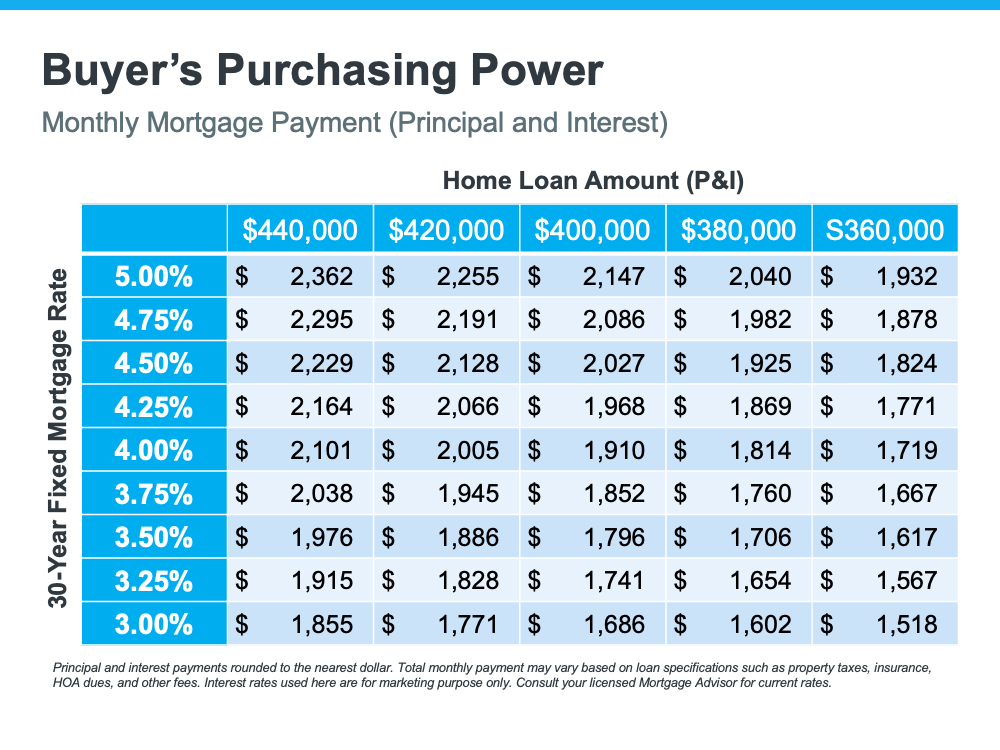
If you’re ready to start building your net worth, the current real estate market offers several opportunities you should consider. For example, with today’s low mortgage rates, your purchasing power may be higher now than it has been in some time. That means there may be no better time than now to start working towards your homeownership goals – especially since rates are anticipated to rise in the coming months.

Bottom Line

Owning a home provides one of the strongest foundations for building individual wealth and lasting financial security. If you’re ready to start your path towards homeownership, let’s connect today.

If Housing Affordability Is About the Money, Don’t Forget This.

If Housing Affordability Is About the Money, Don’t Forget This. | Simplifying The Market

There are many non-financial benefits of buying your own home. However, today’s headlines seem to be focusing primarily on the financial aspects of homeownership – specifically affordability. Many articles are making the claim that it’s not affordable to buy a home in today’s market, but that isn’t the case.

Today’s buyers are spending approximately 20% of their income on their monthly mortgage payments. According to The Essential Guide to Creating a Homebuying Budget from Freddie Mac, the 20% of income that purchasers are currently paying is well within the 28% guideline suggested:

“Most lenders agree that you should spend no more than 28% of your gross monthly income on a mortgage payment (including principal, interest, taxes and insurance).”

So why is there so much talk about challenges regarding affordability?

It’s Not That Homes Are Unaffordable – It’s That They’re Less Affordable.

Since home prices are rising, it’s true that homes are less affordable than they have been since the housing crash fifteen years ago. Headlines making these claims aren’t incorrect; they just don’t tell the whole story. To paint the full picture, you have to look at how today stacks up with historical data. A closer analysis of affordability going further back in time reveals that homes today are more affordable than any time from 1975 to 2005.

Despite that, the chatter about affordability is pushing some buyers to the sidelines. They don’t feel comfortable knowing someone else got a better deal a year ago.

However, Are Homes Really Less Affordable if We Consider Equity?

In a recent post, Odeta Kushi, Deputy Chief Economist at First American, offers a different take on the financial components of housing affordability. Kushi proposes we should at least consider the impact equity build-up has on the affordability equation, stating:

“For those trying to buy a home, rapid house price appreciation can be intimidating and makes the purchase more expensive. However, once the home is purchased, appreciation helps build equity in the home, and becomes a benefit rather than a cost. When accounting for the appreciation benefit in our rent versus own analysis, it was cheaper to own in every one of the top 50 markets.”

Let’s look at an example. In the above-mentioned post, Kushi examines the rent versus buy situation in Dallas, Texas. Kushi chose Dallas because home prices there sit near the median of the top 50 markets in the nation.

Kushi first calculates the monthly mortgage payment on a median-priced home with a 5% down payment and a mortgage rate of 3% (see chart below):If Housing Affordability Is About the Money, Don’t Forget This. | Simplifying The MarketKushi then takes the monthly cost and subtracts the appreciation the home had over the previous twelve months. The average house price in Dallas increased 17.5% in the second quarter of 2021 compared to last year (this is in line with the national pace). That equates to an equity benefit of approximately $3,550 each month if the pace remains the same (see chart below):If Housing Affordability Is About the Money, Don’t Forget This. | Simplifying The MarketWe can see the equity gained each month was greater than the monthly mortgage payment, resulting in a negative cost to own. The buyer could build their net worth by $1,830 each month – after paying their mortgage.

Kushi then compares the monthly cost of owning to the cost of renting (see chart below):If Housing Affordability Is About the Money, Don’t Forget This. | Simplifying The MarketWhen adding equity build-up into the equation, the cost of renting is $3,140 more expensive than owning. Again, the First American analysis shows that it’s less expensive to own in each of the top 50 markets in the country when including the equity component.

Bottom Line

If you’re on the fence about whether to buy or rent right now, let’s connect so we can determine if the equity increase in our local market should impact your decision.

What Do Experts Say About Today’s Mortgage Rates?

What Do Experts Say About Today’s Mortgage Rates? | Simplifying The Market

Mortgage rates are hovering near record lows, and that’s good news for today’s homebuyers. The graph below shows mortgage rates dating back to 2016 and where today falls by comparison.

What Do Experts Say About Today’s Mortgage Rates? | Simplifying The MarketGenerally speaking, when rates are low, you can afford more home for your money. That’s why experts across the industry agree – today’s low rates present buyers with an incredible opportunity. Here’s what they have to say:

Sam Khater, Chief Economist at Freddie Mac, points out the historic nature of today’s rates:

“As the economy works to get back to its pre-pandemic self, and the fight against COVID-19 variants unfolds, owners and buyers continue to benefit from some of the lowest mortgage rates of all-time.”

Mark Fleming, Chief Economist at First American, talks about how rates impact a buyer’s bottom line:

“Mortgage rates are generally the same across the country, so a decline in mortgage rates boosts affordability equally in each market.”

Danielle Hale, Chief Economist at realtor.com, also notes the significance of today’s low rates and urges buyers to carefully consider their timing:

Those who haven’t yet taken advantage of low rates to buy a home or refinance still have the opportunity to do so this summer.”

Hale goes on to say that buyers who don’t act soon could see higher rates in the coming months, negatively impacting their purchasing power:

“We expect mortgage rates to fluctuate near historic lows through the summer before beginning to climb this fall.”

And while mortgage rates are still low today, the data from Freddie Mac indicates rates are fluctuating ever so slightly right now, as they moved up one week before inching slightly back down in their latest release. It’s important to keep in mind the influence rates have on your monthly mortgage payment.

Even small increases can have a big impact on what you pay each month. Trust the experts. Today’s rates give you opportunity and flexibility in what you can afford. Don’t wait on the sidelines and hope for a better rate to come along; the rates we’re seeing today are worth capitalizing on.

Bottom Line

Mortgage rates hover near record lows today, but experts forecast they’ll rise in the coming months. Waiting could prove costly when that happens. Let’s connect today to discuss today’s rates and determine if now’s the time for you to buy.

More Young People Are Buying Homes

More Young People Are Buying Homes | Simplifying The Market

There’s a common misconception that younger generations aren’t interested in homeownership. Many people point to the fact that millennials put off purchasing their first home as a reason for this belief.

Odeta Kushi, Deputy Chief Economist for First American, explains why millennials have put off certain milestones linked to homeownership. Those delays led to their homeownership rates trailing slightly behind older generations:

Historically, millennials have delayed the critical lifestyle choices often linked to buying a first home, including getting married and having children, in order to further their education. This is clear in cross-generational comparisons of homeownership rates which show millennials lagging their generational predecessors.”

So, it’s partially true that some millennials have waited on homeownership to focus on other things in their lives – and that’s impacting certain housing market trends.

Data from the National Association of Realtors (NAR) indicates the average age of a first-time homebuyer is higher today than it’s been over the past 40 years. As the graph below shows, homebuyers today are purchasing their first home an average of 4 years later than people in the 1980s and early 1990s:More Young People Are Buying Homes | Simplifying The MarketBut just because millennials are hitting certain milestones later in life doesn’t mean they’re not interested in becoming homeowners. The recent U.S. Census reveals a significant increase in homeownership rates for millennials and other young homebuyers.More Young People Are Buying Homes | Simplifying The MarketAs the graph above shows, millennials are entering the market in full force, and their share of the market is growing. Based on the data, the belief that younger generations don’t want to buy homes is a misconception. In fact, the recent Capital Market Outlook report from Merrill-Lynch further drives home this point, as it specifically mentions the effect millennials are having on demand:

“Demand is very strong because the biggest demographic cohort in history is moving through the household-formation and peak home-buying stages of its life cycle.”

Kushi is following the trend of millennial homeownership and puts it more simply, saying:

“. . . it’s clear that younger households (millennials!) are driving homeownership growth.”

As the largest generation, millennials’ impact on the market is growing as more and more people from that generation reach homebuying age – and Generation Z isn’t far behind, either. That means younger generations will likely continue to drive demand in the housing market for years to come.

Bottom Line

If you’re a member of a younger generation and interested in purchasing a home, you’re not alone. Many of your peers are on their path to homeownership, too. Let’s connect today and discuss what you can do to accomplish your homebuying goals.

Real Estate: It’s Still a Lack of Supply, Not a Lack of Demand

Real Estate: It’s Still a Lack of Supply, Not a Lack of Demand | Simplifying The Market

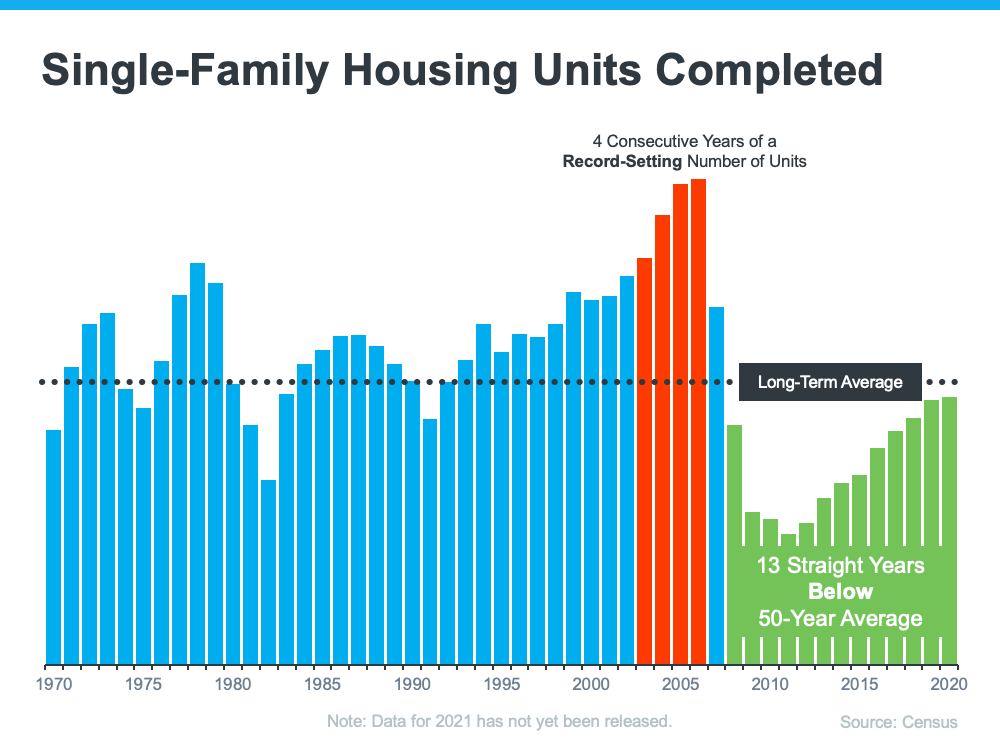
One of the major questions real estate experts are asking today is whether prospective homebuyers still believe purchasing a home makes sense. Some claim rapidly rising home prices are impacting demand and, by extension, leading to the recent slowdown in sales activity.

However, demand isn’t the real issue. Instead, it’s the lack of supply (homes available for sale). An article from the Wall Street Journal shows this is true for new home construction:

Home builders have sold more homes than they can build. Now they are limiting their sales in an effort to catch up.”

The article quotes David Auld, CEO of D.R. Horton Inc. (the largest homebuilder by volume in the United States since 2002), explaining how they don’t have enough homes for the number of buyers coming into their models:

“Through our history, to have somebody walk into our models and to tell them, ‘We don’t have a house for you to buy today’, is something that is foreign to us.”

Danielle Hale, Chief Economist for realtor.com, also explains that, in the existing home sale market, the slowdown in sales was a supply challenge, not a lack of demand. Responding to a recent uptick in listings coming to market, she notes:

“. . . if these changing inventory dynamics continue, we could see a wave of real estate activity heading into the latter part of the year.”

Again, the buyers are there. We just need houses to sell to them.

If the slowdown in sales was the result of demand waning, we would start to see home prices beginning to moderate – but this isn’t the case. As Mark Fleming, Chief Economist for First American, explains:

“There’s a lot of conversation around rising prices and falling quantity in the housing market, and there’s this concept, or this idea, that it’s a demand-side problem . . . . But, if demand were falling dramatically, we would actually see less price pressure, less home price growth.”

Instead, we’re seeing price appreciation accelerate throughout this year, as evidenced by the year-over-year percentage increases reported by CoreLogic:

  • January: 10%
  • February: 10.4%
  • March: 11.3%
  • April: 13%
  • May: 15.4%
  • June: 17.2%

(July numbers are not yet available)

There’s a shortage of listings, not buyers, and there are three very good reasons for purchasers to still be interested in buying a home this year.

1. Affordability isn’t the challenge some are claiming it to be.

Though home prices have risen dramatically over the last 18 months, mortgage rates remain near historic lows. Because of these near-record rates, monthly mortgage payments are affordable for most buyers.

While homes are less affordable than they were last year, when we adjust for inflation, we can see they’re also more affordable than they were in the 1970s, 1980s, 1990s, and much of the 2000s.

2. Owning is a better long-term decision than renting.

A recent study shows renting a home takes up a higher percentage of a household’s income than owning one. According to the analysis, here’s the percentage of income homebuyers and renters should expect to pay now versus at the end of the year.Real Estate: It’s Still a Lack of Supply, Not a Lack of Demand | Simplifying The MarketWhile the principal and interest of a monthly mortgage payment remain the same over the lifetime of the loan, rents increase almost every year.

3. Owners build their wealth. Renters build their landlord’s wealth.

Whether you’re a homeowner or an investor, real estate builds wealth through growing equity year-over-year. If you own, your household is gaining the benefit of that wealth accumulation. Fleming says:

The major financial advantage of homeownership is the accumulation of equity in the form of house price appreciation . . . . We have to take into account the fact that the shelter that you’re owning is an equity-generating or wealth-generating asset.”

Odeta Kushi, Deputy Chief Economist at First American, elaborates in a recent article:

“. . . once the home is purchased, appreciation helps build equity in the home, and becomes a benefit rather than a cost. When accounting for the appreciation benefit in our rent versus own analysis, it was cheaper to own in every one of the top 50 markets, including the two most expensive rental markets, San Francisco and San Jose, Calif.”

Today, that equity buildup is substantial. The National Association of Realtors (NAR) reports:

“The median sales price of single-family existing homes rose in 99% of measured metro areas in the second quarter of 2021 compared to one year ago, with double-digit price gains in 94% of markets.”

In 94% of markets, there was a greater than 10% increase in median price. That means if you bought a $400,000 home in one of those markets, your net worth increased by at least $40,000. If you rented, the landlord was the recipient of the wealth increase.

Bottom Line

For many reasons, housing demand is still extremely strong. What we need is more supply (house listings) to meet that demand.

Are Houses Less Affordable Than They Were in Past Decades?

Are Houses Less Affordable Than They Were in Past Decades? | Simplifying The Market

There are many headlines about how housing affordability is declining. The headlines are correct: it’s less affordable to purchase a home today than it was a year ago. However, it’s important to give this trend context. Is it less expensive to buy a house today than it was in 2005? What about 1995? What happens if we go all the way back to 1985? Or even 1975?

Obviously, the price of a home has appreciated dramatically over the last 45 years. So have the prices of milk, bread, and just about every other consumable. Prices rise over time – we know it as inflation.

However, when we look at housing, price is just one component that makes up the monthly cost of the home. Another key factor is the mortgage rate at the time of purchase.

Let’s look back at the cost of a home over the last five decades and adjust it for inflation by converting that cost to 2021 dollars. Here’s the methodology for each data point of the table below:

  • Mortgage Amount: Take the median sales price at the end of the second quarter of each year as reported by the Fed and assume that the buyer made a 10% down payment.
  • Mortgage Rate: Look at the monthly 30-year fixed rate for June of that year as reported by Freddie Mac.
  • P&I: Use a mortgage calculator to determine the monthly principal and interest on the loan.
  • In 2021 Dollars: Use an inflation calculator to determine what each payment would be when adjusted for inflation. Green means the homes were less expensive than today. Red means they were more expensive.

Are Houses Less Affordable Than They Were in Past Decades? | Simplifying The MarketAs the chart shows, when adjusted for inflation, there were only two times in the last 45 years that it was less expensive to own a home than it is today.

  1. Last year: Prices saw strong appreciation over the last year and mortgage rates have remained relatively flat. Therefore, affordability weakened.
  2. 2010: Home values plummeted after the housing crash 15 years ago. One-third of all sales were distressed properties (foreclosures or short sales). They sold at major discounts and negatively impacted the value of surrounding homes – of course homes were more affordable then.

At every other point, even in 1975, it was more expensive to buy a home than it is today.

Bottom Line

If you want to buy a home, don’t let the headlines about affordability discourage you. You can’t get the deal your friend got last year, but you will get a better deal than your parents did 20 years ago and your grandparents did 40 years ago.